

 The Nigerian situation between 1999 till date when the military eventually returned to the Barracks shall remain a reference point in years to come and students of contemporary history will have a lot to up their sleeves.
Though it has been argued that, handling the problems related to domestic violence and internal security is the basic function of the police, along with maintenance of law-and-order. However, experience overtime has shown that the police are found ill-equipped and ill-trained to handle the situations for which these police organisations are formed! Thus, calling in the military becomes the only available option
Armed groups usually spring up in unconventional ways to challenge the very existence of the state and thus, Such as well from time to time has called for deployment of troops to the street. The recent case of the Nigerian military deploying its personnel to some parts of the country is something that has been viewed with mixed feelings, arguments, counter arguments and reactions.
Addressing such, one may therefore, need to look at what has made these operations necessary and perhaps look into what they are and if they have been able to deliver to the People.
Looking at it holistically, it is imperative to note that the military is a force authorised to use lethal or deadly force and weapons to support the interests of the state and ‘some’ or all of its citizens. The emphasis on ‘some’ is that there are times, just like in the Nigerian example and as seen elsewhere that citizens turned out laws, pick up arms against the state and in this kind of unfortunate scenario, the military may have no option but to protect the interests of law abiding citizens only.
The military typically consists of an Army, Navy, Air Force, and in certain countries the Marines and Coast Guard. The task of the military is usually defined as defence of the state, and its citizens, and the prosecution of war against another state. The military may also have additional manifest and latent functions within a society, including, the promotion of a political agenda,as recently seen in Zimbabwe, protecting corporate economic interests, internal population control, construction, emergency services, social ceremonies, and guarding important areas and state assets.
The military may also function as a discrete sub culture within a larger civil society, through the development of separate infrastructures, which may include housing, schools, utilities, logistics, health and medical, as recently seen in the medical outreach by the soldiers in the ‘Operation Egwu Eke’, in the south east and some parts of the south South, law, food production, finance and banking. In broad usage, the terms “armed forces” and “military” are often treated as synonymous, although in technical usage a distinction is sometimes made in which a country’s armed forces may include both its military and other paramilitary forces. Armed force is the use of armed forces to achieve political objectives.
For much of military history, particularly In a democracy or other systems, the relationship between the military and the state it serves is a complicated and ever-evolving one. Much depends on the nature of the society itself, and whether it sees the military as important, as for example in time of threat or war, or a burdensome expense typified by defence cuts in time of peace. Nigeria has learnt it’s lessons. Those living in the terror ravaged north-eastern Nigeria knows better and sees the military as an emblem of salvation. One difficult matter in the relation between military and society is control and transparency. In some countries, limited information on military operations and budgeting is accessible for the public, hence the bruhaha when a military operation is launched to quell or handle palpable threats.
Since the emergence of president Muhammadu Buhari, a retired military General in May 2015, the Nigerian military has carried out myriad of operations under various code names in a bid to continue to safeguard the state from inimical threats within.
Operation Lafiya Dole which literally translates to ‘Peace by all means’ in Hausa. Is the military code name for the war on terror in Nigeria’s northeast. It was launched by Chief of Army Staff, Lieutenant General Tukur Buratai in July 2015 as a replacement for “Operation Zaman Lafiya” which implies, ‘Let’s live in peace’. There was also, Operation Sharan Daji, which was launched in July 2015 to stem the tides of cattle and other livestock rustling and armed banditry in the Nigerian Northwest region and the Operation Awatse: Launched in the Southwest to tackle militants and oil installation vandals around the Arepo, Ishawo and Elepete creeks in Lagos and Ogun States. Operation Awatse was implemented by a combined team from the Air force and Navy with plenty of support from army boots on the ground.
Then came the Operation Shirin Harbi’ Launched in 2015 to combat the crisis in Bauchi and Gombe States. Shirin Harbi was also useful as the military sought to rein in the killers in Southern Kaduna, and then, Harbin Kunama I, which was the military’s intervention and response to cattle rustling and armed banditry in the Forest of Zamfara and environs. Harbin Kunama literally means sting of a Scorpion” also launched in 2015, in northwest nigeria.
Crocodile Smile I, which was a South-South operation flagged off in August 2015, was targeted towards improving operational effectiveness in the creeks and halt the destructive activities of oil thieves and militants in the Niger Delta region, sabotaging and crippling Nigeria’s oil installations.
One of the most talked about Ops of the Nigerian military is the Operation Python Dance, in Nigeria’s south East, which initially was to check the rising tides of robberies, kidnapping and cultism in and around Anambra, until the military deemed it strategically fit to float the Operation Egwu Eke II, the famous Python Dance II. This operation which was specifically aimed at checking and halting the secessionist agitation in Southeast Nigeria.
The Nigerian military has in all these operations mentioned above, performed very well and professionally too. The military often function as societies within societies, by having their own military communities, economies, education, medicine, and other aspects of a functioning civilian society. The militarist argument asserts that a civilian population is dependent upon, and thereby subservient to the needs and goals of its military for continued independence. .
Every nation had different needs for internal military operations . How these needs are determined forms the basis of their composition, deployment, rules of engagement, equipment, and use of facilities. It also determines what military does in terms of peacetime, and wartime activities. All military forces, whether large or small, are military organisations that have official state, and world recognition as such.
The military, generally comprising of soldiers, Navy and airmen, are capable of executing the many specialised operational missions and tasks required for the military to execute policy directives. Just as in the commercial enterprises where there are, in a corporate setting, directors, managers and various staff that carry out the business of the day as part of business operations or undertake business project management, the military also has its routines and projects. During peacetime, when military personnel are mostly employed in garrisons or permanent military facilities, they mostly conduct administrative tasks, training and education activities, and technology maintenance. Another role of military personnel is to ensure a continuous replacement of departing servicemen and women through military recruitment, and the maintenance of a military reserve.
It is evident that the Nigerian military in a bid to safeguard the state and it’s territorial integrity has conducted a number of operations in response to a developing situations. These operations are designed as a military plan to resolve the situation in the state’s favour.
Threats to internal stability often turnout the greatest threats to national security. Having experienced a number of regional separatist struggles, and instability created by radical religious / political movements, it is understandable that the Nigerian Governments may have little tolerance for public disorder! Fulfilling the National Security function thus entails adapting capabilities in order to contribute to the collective management of regional and global security challenges. Hence, the need for military operations.
More than the external threats, the enemies from with-in Nigeria, have demanded the pro-active deployment of armed forces to maintain law-and-order, and, to maintain sovereignty and integrity of the nation in the face of serious threats of national disintegration!
All armed forces have both domestic and international responsibilitiesis. This we have seen via different operations in different parts of the country.
It is very clear that Nigeria as a country has firmly resolved to fight the rising tide of separatist movements and has shown willpower to maintain ‘law-and-order’ all over the nation so that every citizen gets equal opportunity of development and progress. These efforts need support from all the quarters and in all forms. It is constitutional responsibility of the armed forces to deal effectively with the internal threats emanating from various sources eroding the nation’s strength and will power beside the territorial integrity.
Hence the big guns and tanks are sometimes needed to safeguard the state from enemies of humanity. Those who threaten the state do so also to humanity and it’s the responsibly of every nation to protect its own. This is the reason why Laws are also dynamic to protect those who protect us.
In the Nigerian scenario, the military has done well. Like Winston Churchill once said, ‘We sleep safely at night because rough men stand ready to visit violence on those who would harm us’.
Abubakar , Executive Secretary, Save Humanity Advocacy Centre writes from Abuja.
The post Understanding Military Operations as Safeguard of State appeared first on Within Nigeria.
Zoto, a mobile payment app used by over 1 million Nigerians, has announced a new app design. According to company officials, the new app is designed to make Zoto the fastest and most reliable payment app in Nigeria. An introductory sales offer is also announced on this occasion, and this will enable users to enjoy services at just ₦1 only on the new app for a limited period. In addition to subscription recharges, TV and broadband payments, the new app comes with services like electricity and betting payments also. This announcement was made at a press briefing in Zoto’s Lagos office this week.
Commenting on the development, Oshone Ikazoboh, Zoto’s Co-Founder, said the newly redesigned Zoto App will further improve the experience of payments. He said electronic payment in Nigeria suffer from high failure rate, OTP delays, and poor user experience as existing solutions are not reliable and mobile friendly.
“Zoto promises a delightful payment experience. Using Zoto wallet, users can make payments within 5 seconds without going through the tedious process of bank OTP and each payment is secured and complies with CBN policies,”
Ikazoboh said, adding that Zoto’s machine learning process also predicts user’s favourite recharge and most frequent payment they are likely to make. He further explained that close to 80% of web traffic in Nigeria comes from mobile and that Zoto’s mobile-focused approach helps provide payment services to masses.
Speaking further, Ikazoboh said the value Zoto brings is convenience and users’ ease of making payments wherever they are.
“We all want to maximise our time, so when making a payment we want the fastest, safest way of doing that. This is what motivated the Zoto idea; we want to make payments as convenient as possible,”
he said.
While expatiating on Zoto’s brand promise, Ikazoboh informed that the collective promise from Zoto is to continue to provide cutting-edge innovations towards making the payment experience the fastest, easiest and most rewarding. On mobile app stores, Zoto currently enjoys a high user rating. Zoto’s rating on Android and iOS averages 4.6 out of 5.
Related Topics Zoto Mobile Recharge App Review Cheap Android Phones Best 4G Phones Best Android PhonesThe post Nigeria’s fastest growing payment startup, Zoto, announces ₦1 sale only on the new app appeared first on Nigeria Technology Guide.

LeEco Le Pro 3 Elite, a variant of the Le Pro 3, is a phone that promises impressive performance without costing a fortune. In spite of the ‘Elite’ moniker, it is somewhat a downgrade of the regular variant, but still promises solid performance with its Snapdragon 820 processor and 6GB RAM.
Jumia Nigeria – See Offers | Jumia Kenya – See Offers

You can easily mistake the LeEco Le Pro 3 Elite for the regular variant on looks. It sports similar all-metal body featuring aluminium alloy. The smartphone also flaunts a slim profile at just 7.5 millimetres in thickness.
LeEco Le Pro 3 Elite offers ample screen estate with a diagonal size of 5.5 inches. The IPS panel promises immersive wide angle viewing with Full HD resolution to boot. It appears to feature 2.5D curved glass as well.
Camera and StorageThere is a 16MP sensor with f/2.0 aperture on the rear for capturing what should be high quality images. Camera features include phase detection autofocus and dual-LED dual tone flash. The LeEco Le Pro 3 Elite shoots 4K videos at 30 frames per second.
You will find an 8MP shooter with f/2.2 aperture on the front for selfies. This shoots Full HD (1080p) videos. You get 32 GB, 64 GB or 128 GB in onboard storage, depending on model.
Performance and OSLeEco provides a Qualcomm Snapdragon 820 chipset with four Kryo CPUs for all the heavy lifting on this device. This processor used to be what you’d find on flagship smartphones sometime ago. Although the Le Pro 3’s Snapdragon 821 is more powerful, this should also do a good job.
Enjoyable performance is especially more assured with up to 6GB RAM available. The LeEco Le Pro 3 Elite runs off its maker’s eUI 5.8 software, which is based on Android 6.0 Marshmallow.
Other FeaturesUsers who place high premium on battery life may find a great match in the LeEco Le Pro 3 Elite. It packs a huge 4,070mAh Li-Ion battery, which you can top up faster, thanks to Quick Charge 3.0 tech.
The LeEco Le Pro 3 Elite features a fingerprint scanner on its rear. Connectivity options include a USB Type-C port and dual-band Wi-Fi 802.11 a/b/g/n/ac with Wi-Fi Direct. There is Dolby Atmos technology to enhance sound quality.
LeEco Le Pro 3 Elite is available on Jumia in Nigeria, Ghana, and Kenya. You can buy the smartphone at leading online stores in your country. LeEco Le Pro 3 Elite Price in Nigeria ranges from 75,500 Naira to 115,000 Naira.
Here are a few specs of the LeEco Le Pro 3 Elite:
General Features Platform: Android 6.0 (Marshmallow), EUI 5.8 Processor: Quad-core Processor: 2.15 GHz dual-core Kryo & 1.6 GHz dual-core Kryo (Qualcomm MSM8996 Snapdragon 820) GPU: Adreno 530 Memory: 4 GB RAM or 6 GB RAM Colours: Rose gold, Gold, Silver, Gray Dimension: 151.4 x 73.9 x 7.5 mm Weight: 175 g SIM Type: Nano-SIM SIM Count: Dual SIM , Dual stand-by Display Display: 5.5 inches, IPS LCD capacitive touchscreen, 16M colors, 1080 x 1920 pixels (401 ppi) Screen Protection: Corning Gorilla Glass Camera Rear Camera: 16 MP Camera, f/2.0, 2160p HD Video@30fps, 1080p HD Video@30fps, 720p HD Video@120fps Rear Camera Features: 1/2.8″ sensor size, 1.12 µm pixel size, geo-tagging, touch focus, face detection, panorama, HDR, phase detection autofocus, dual-LED (dual tone) flash Front Camera: 8 MP Camera, f/2.2 Storage Built-in Storage: 32 GB or 64 GB Memory Card Support: No Bundled Cloud Storage: – Network Support 2G GSM: Yes 2G CDMA 1X: Yes 3G WCDMA: Yes 3G CDMA EVDO: Yes 4G LTE: Yes, LTE band 1(2100), 2(1900), 3(1800), 4(1700/2100), 5(850), 7(2600), 8(900), 20(800), 38(2600), 39(1900), 40(2300), 41(2500) Internet & Connectivity GPRS: Yes EDGE: Yes 3G/WCDMA/HSPA: Yes HSPA+: Yes, HSPA 42.2/5.76 Mbps CDMA EVDO: Yes 4G LTE: Yes, LTE-A (3CA) Cat12 600/150 Mbps WLAN: Yes, Wi-Fi 802.11 a/b/g/n/ac, dual-band, WiFi Direct Wi-Fi Hotspot: Yes Bluetooth: Yes, Bluetooth 4.2, A2DP, LE NFC: No Infrared Blaster: No USB Port: Yes, Type-C 1.0 reversible connector Messaging SMS/MMS: Yes Instant Messaging: Yes Push Emails: Yes Email Protocol: – Entertainment Music Player: MP3/WAV/eAAC+/FLAC player Video Player: Xvid/MP4/H.265 player FM Radio: Yes Loudspeaker: Yes 3.5mm Jack: No Navigation Navigation: Yes, with A-GPS, GLONASS, BDS Maps: Yes Sensors & Control Digital Compass: Yes Accelerometer: Yes Proximity Sensor: Yes Light Sensor: Yes Barometer: No SpO2: No Pedometer: No Heart Rate Monitor: No Gyroscope: Yes Fingerprint Scanner: Yes (Rear) Iris Scanner: No Face Unlock: No Intelligent Digital Assistant: – Motion Sensing / Gesture Control: – Voice Control: – Other Features Video Streaming: Yes Active Noise Cancellation: Yes Wireless Charging: No Built-in Mobile Payment: No Water Resistant: No Dust Resistant: No Image Editor: Yes Video Editor: Yes Document Viewer: Yes Document Editor: – Battery Battery: 4070 mAh Li-Ion Battery (Non Removable) Talktime: Yes, up to 20 hours Standby Time: Yes, up to 400 hours Fast Charging: YesThe post LeEco Le Pro 3 Elite Specs and Price appeared first on Nigeria Technology Guide.

LeEco Le Pro 3 AI is a variant of 2016’s Le Pro 3 featuring Artificial Intelligence or to be precise an AI assistant. It comes with a dual rear camera setup and gets processing power from an impressive 10-core chipset.
Jumia Nigeria – See Offers | Jumia Kenya – See Offers
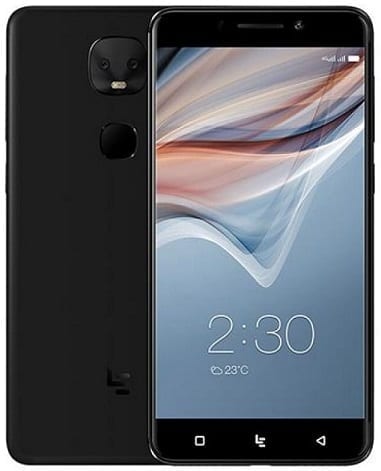
On the front, the LeEco Le Pro 3 AI looks a lot like the regular variant. You will only notice slight design tweaks on the rear. It features a metal body and weighs slightly less than the Le Pro 3. It is available in gold, rose gold and black colour variants.
LeEco Le Pro 3 AI also sports a 5.5-inch Full HD IPS display with 2.5D curved glass. The screen is brighter and boasts higher NTSC colour gamut, compared to the Le Pro 3.
CameraThe LeEco Le Pro 3 AI drops the 16MP rear camera of the Le Pro 3. The smartphone comes instead with a pair of 13MP sensors. There is one colour lens and one monochrome lens. Camera features include phase detection and laser autofocus and dual-LED dual tone flash.
You can shoot stunning 4K videos with the primary shooter. The 8MP front facing sensor with f/2.2 aperture also serves you Full HD (1080p) videos.
Hardware and SoftwareLeEco offers two types of chipsets for its Le Pro 3 AI. The Standard model uses MediaTek Helio X23, while an Eco Edition rocks MediaTek Helio X27. Both are deca-core processors, but the latter is faster at 2.6 GHz. RAM is 4 GB and onboard storage is 32 GB or 64 GB, depending on the model you buy.
But you may be disappointed to learn that LeEco Le Pro 3 AI still boots Android 6.0 Marshmallow OS. This has LeEco’s EUI 5.9 skin on top.
Other FeaturesThe main selling point of the LeEco Le Pro 3 AI has to be its Artificial Intelligence (AI) feature, as its name suggests. This powers a voice assistant which the Chinese company calls LeLe. You can use it to perform different functions and can activate even without turning on the display. There is claim that it gets better over time as it learns your personal interests.
The LeEco Le Pro 3 AI sheds some battery capacity, coming with a 4,000mAh juicer. It supports fast charging via a USB Type-C port. You will find its fingerprint sensor on the rear.
LeEco Le Pro 3 AI is available on Jumia in Nigeria, Ghana, and Kenya. The price is around $260. You can buy the smartphone at leading online stores in your country. LeEco Le Pro 3 AI Price in Nigeria ranges from 53,500 Naira to 75,000 Naira.
Here are a few specs of the LeEco Le Pro 3 AI Edition:
General Features Platform: Android 6.0 (Marshmallow), EUI 5.9 Processor: Deca-core Processor: Dual-core Cortex-A72 @ 2.1GHz ~ 2.3GHz, 1.85GHz quad-core Cortex-A53, 1.4GHz quad-core Cortex-A53 (Mediatek MT6797D Helio X23 or Helio X27) GPU: Mali-T880MP4 Memory: 4 GB RAM Colours: Gold, Rose Gold, Black Dimension: 152.4 x 75.1 x 7.5 mm Weight: 168 g SIM Type: Nano-SIM SIM Count: Dual SIM, dual stand-by Display Display: 5.5 inches, IPS LCD capacitive touchscreen, 16M colors, 1080 x 1920 pixel (401 ppi) Screen Protection: Corning Gorilla Glass Camera Rear Camera: 13 MP Dual Camera, f/2.0, 2160p HD Video@30fps, 1080p HD Video@30fps, 720p HD Video@120fps Rear Camera Features: Geo-tagging, touch focus, face detection, panorama, HDR, phase detection and laser autofocus, dual-LED (dual tone) flash Front Camera: 8 MP Camera, f/2.2 Storage Built-in Storage: 32GB or 64GB Memory Card Support: No Bundled Cloud Storage: – Network Support 2G GSM: Yes 2G CDMA 1X: No 3G WCDMA: Yes 3G CDMA EVDO: No 4G LTE: Yes, LTE band 1(2100), 3(1800), 7(2600), 38(2600), 39(1900), 40(2300), 41(2500) Internet & Connectivity GPRS: Yes EDGE: Yes 3G/WCDMA/HSPA: Yes HSPA+: Yes CDMA EVDO: No 4G LTE: Yes WLAN: Yes, Wi-Fi 802.11 a/b/g/n/ac, dual-band, WiFi Direct Wi-Fi Hotspot: Yes Bluetooth: Yes, Bluetooth v4.2, A2DP, LE NFC: Yes Infrared Blaster: No USB Port: Yes, Type-C 1.0 reversible connector Messaging SMS/MMS: Yes Instant Messaging: Yes Push Emails: Yes Email Protocol: – Entertainment Music Player: MP3/WAV/eAAC+/FLAC player Video Player: Xvid/MP4/H.265 player FM Radio: No Loudspeaker: Yes 3.5mm Jack: No Navigation Navigation: Yes, with A-GPS, GLONASS, BDS Maps: Yes Sensors & Control Digital Compass: Yes Accelerometer: Yes Proximity Sensor: Yes Light Sensor: Yes Barometer: No SpO2: No Pedometer: No Heart Rate Monitor: No Gyroscope: Yes Fingerprint Scanner: Yes (Rear) Iris Scanner: No Face Unlock: No Intelligent Digital Assistant: – Motion Sensing / Gesture Control: – Voice Control: – Other Features Video Streaming: Yes Active Noise Cancellation: Yes Wireless Charging: No Built-in Mobile Payment: No Water Resistant: No Dust Resistant: No Image Editor: Yes Video Editor: Yes Document Viewer: Yes Document Editor: – Battery Battery: 4000 mAh Li-Po Battery (Non Removable) Talktime: Yes, up to 22.6 hours Standby Time: Yes, up to 340 hours Fast Charging: YesThe post LeEco Le Pro 3 AI Specs and Price appeared first on Nigeria Technology Guide.

Keeping up with the latest and greatest in information technology trends seems like a never-ending task nowadays. Many businesses dedicate at least one staff member, if not an entire team, to identifying the newest IT topics and how to integrate them into their daily business practices. Sometimes they even hire an outside specialist who can walk them through the different types of new technologies and then help with the integration process.
If you are a smaller business and do not have the resources to hire a specialist, do not think all hope is lost. You can find tons of technology articles online that thoroughly define and describe these trends. One of the best ways to begin learning is familiarizing yourself with the popular terms and topics in 2017. Check out the list below to get started.
New IT Topics to Know in 2017 1. On-Demand EverythingModern consumers developed a taste for on-demand services with the help of digital video recorders (DVRs) and other on-demand devices that allow them to stream their favorite television shows and movies whenever they pleased. Thanks to the introduction of on-demand apps by companies like Uber and those copying Uber’s unique format, the consumer desire for on-demand everything is something businesses need to remember in 2017.
2. Smart Home Tech and IoTIf you have not yet heard about the Internet of Things (IoT), you will be soon. IoT simply refers to the longstanding idea of creating integrated home technologies that seamlessly connect and work with one another. This smart home tech involves cloud computing, networks of sensors that gather data, and increasing communication from sensor to machine as well as machine to machine.

Mesh app and service architecture (MASA) is the beginning of this movement towards smart home tech. MASA uses multiple channels to leverage serverless and cloud computing services through microservices, containers, events, and APIs to produce dynamic, modular, and flexible solutions.
4. Data Integrity and SecurityWith the increasing number of data breaches every year, it is no wonder many big companies and even smaller businesses have started focusing heavily on adaptive security architectures. Security must be the main concern when developing websites and applications, and especially when exploring IoT environments. These adaptive security measures must reflect the fluidity of MASA and IoT technologies and, therefore, require more forethought than in the past.
5. More Accessible Big DataAlthough the term big data has been around for the last five years, many small businesses still do not quite understand what big data is or how it works. Companies who focus on collecting and distributing this data recognized the difficulties normal people face when attempting to digest these massive amounts of numerical data. You can expect to see some advancement to make this big data more accessible and empathetic.

2016 saw huge steps forward in the world of virtual reality (VR) and augmented reality (AR) with the release of Oculus Rift. It was very well received and gaming companies soon released thousands of VR games and apps. Another great example of AR’s popularity was PokemonGo, an AR game with more than 100 million downloads. Consumers should expect to see more VR and AR versions of games, applications, and practically everything else over the next few years.
7. Integration of the Physical and DigitalTechnology has become increasingly essential in our everyday lives since the introduction of mobile devices. Think about the last meeting you attended or conversation you had where someone did not need to Google an answer to at least one question. Consumers will begin to see physical brands and stores, such as Walmart, introducing more online features, and big digital brands, such as Amazon, adding more physical products.
BlockchainAnother of the new technologies sure to make a splash in 2017 is the introduction of blockchains. These are a kind of distributed ledger that groups value exchange transactions in a digital form of currency, like bitcoin, into sequential blocks. Companies in the title registry, identify verification, and music distribution worlds hope to use blockchains to transform their industry operating models. They can then reduce friction through transparent access and add trust in untrustworthy environments.
Related Topics Cheap Android Phones Best 4G Phones Best Android PhonesThe post Top 8 Information Technology Trends of 2017 appeared first on Nigeria Technology Guide.

