Apple Watch Series 3 is a third generation range of smartwatches by Apple and arguably the one to beat on the market. With this wearable, you supposedly can afford to leave your mobile phone at home with optional support for 4G LTE connectivity.
Jumia Nigeria – See Offers | Jumia Kenya – See Offers | Jumia Ghana – See Offers
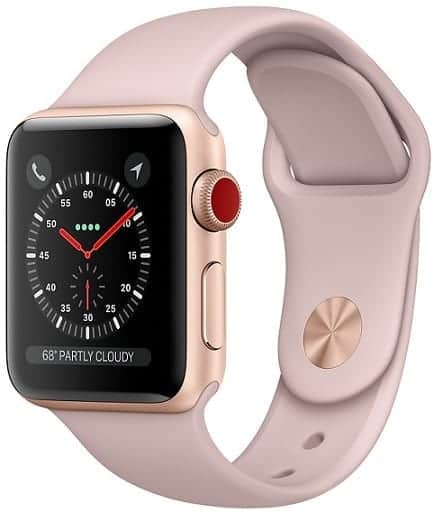
Apple Watch Series 3 is a smartwatch you can mix and match with your outfits. It parades a fully customisable design and offers a variety of faces. You will be spoiled for choice when it comes to the available options; your budget will determine the perfect fit, though.
The Apple Watch Series 3 comes in a variety of finishes, including gold, silver and grey. Its body is built on aluminium or stainless steel with ceramic back. There are also more expensive, special edition models featuring ceramic in their design. As you’d expect, the watch is water-resistant and can survive up to a depth of 50 meters.
DisplayYou can get the wearable in 38mm and 42mm sizes. The OLED display still has a resolution of either 272 x 340 pixels or 312 x 390 pixels. This boasts double the brightness of Apple Watch Series 1 at 1,000 nits. The touchscreen features ‘Ion-X strengthened glass,’ which means this one won’t break easily. Apple Watch Series 3 still supports Force Touch tech.
Miscellaneous Specs and FeaturesThe Apple Watch Series 3 comes with the new S3 processor and W2 chip. Apple says the dual-core processor runs up to 70 percent faster. In its own case, the W2 chip helps the smartwatch deliver up to 85 percent faster Wi-Fi and Bluetooth connections.
The American company also runs its new wearable on its latest watchOS 4 software. This provides users with a variety of features, including Toy Story watch faces and improved, full-function Siri personal assistant. Apple Watch Series 3 also promises better music and workout experiences.
Apple makes its Watch Series 3 available in both LTE and no-LTE models. It embedded an eSIM into the wearable. With LTE, you can enjoy thrilling Apple Music streaming. The device allows you to make and receive calls, including video calls. You can also send and receive text messages.
The Apple Watch Series 3 comes with 8GB or 16GB onboard storage, depending on model. Apple rates battery runtime at up to 18 hours.
Apple Watch Series 3 was launched on September 22, 2017. The 38mm model will go for $399 with LTE and for $329 without. We currently have no information on pricing and availability in Nigeria. Apple Watch Series 3 price in Nigeria is expected to range from 125,000 Naira to 175,000 Naira.
Related Topics iPhone X iPhone 8 Plus Apple iPhone 8 iPhone 7 Plus iPhone 7 Apple iPhone 6S iPhone 6S Plus Compare Prices of SmartwatchesThe post Apple Watch Series 3 Specs and Price appeared first on Nigeria Technology Guide.

Nokia 7 is one phone that promises users exciting experience at a price that is friendlier than that of the flagship Nokia 8. The Android device boasts robust and elegant design, heavy-duty processor, abundant RAM, and dual camera.
Jumia Nigeria – See Offers | Jumia Kenya – See Offers | Jumia Ghana – See Offers
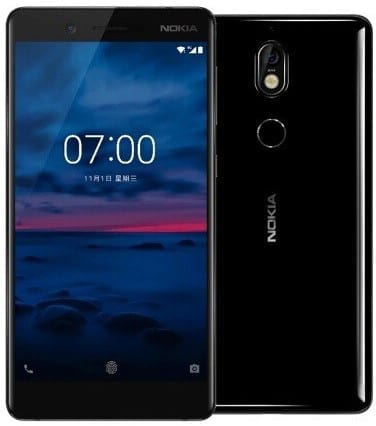
If you look at the Nokia 7 closely, you will notice the premium feel. The design features 7000 series aluminium and diamond-cut edges. The profile is slim at 7.9 millimetres in thickness. This is a phone you’d wish to flaunt before your friends.
The Nokia 7 sports a 5.2-inch display with Full HD resolution of 1,920 x 1,080 pixels. A pixel density of roughly 424 ppi means you can expect super sharp images. The device has robust Corning Gorilla Glass 3 on the front and back.
CameraThe Nokia 7 is another mobile phone to consider if you are not in the market for one that offers dual cameras on the rear. It offers a 16MP lens on the back and a 5MP lens on the front. You are looking at a phone that boasts Carl Zeiss optics. If you have used such in the past, you can tell the quality on offer here.
The primary camera should serve up quality images in poorly lit settings with an f/1.8 aperture and dual tone flash. It boasts phase detection autofocus and 4K video recording capability.
A 5MP camera takes care of your selfie needs. This has an aperture size of f/2.0 and features autofocus.
Hardware and SoftwareA Qualcomm Snapdragon 630 chipset featuring eight cores takes care of all the heavy lifting in the Nokia 7. It runs at speeds up to 2.2 GHz and pairs with an Adreno 508 graphics solution. You also get 4 GB or 6 GB of RAM onboard. Expect games and movies to run fluidly on this one.
Internal storage capacity is 64 GB. If that is not enough, the Nokia 7 takes a microSD card with capacity of up to 256 GB for expansion. It boots Android 7.1.1 Nougat OS that is scheduled for upgrade to Android 8.0 Oreo.
Other FeaturesIf you are a privacy freak, there is a fingerprint scanner on the rear for an extra layer of protection. The Nokia 7 supports USB OTG and has a reversible USB Type-C connector. It offers an impressive array of connectivity options, including dual-band Wi-Fi, Bluetooth 5.0 and NFC.
A 3,000mAh battery provides juice and has a rating of up to 15 hours of talk time. Nokia 7 also supports for fast charging.
Nokia 7 is not yet available in Nigeria, Kenya, or Ghana. It started shipping worldwide on October 24 starting at a price of around $377.
We currently have no data on pricing and availability for Nigeria, Ghana, or Kenya. When available, Nokia 7 Price in Nigeria is expected to range from 145,000 Naira to 175,000 Naira depending on your location.
Here are a few specs of the Nokia 7:
General Features Platform: Android 7.1.1 (Nougat) Processor: Octa-core Processor: 2.2 GHz Cortex-A53 (Qualcomm Snapdragon 630) GPU: Adreno 508 Memory: 4GB or 6 GB RAM Colours: Gloss Black, Matt White Dimension: 141.2 x 71.45 x 7.92 mm Weight: – SIM Type: Nano-SIM SIM Count: Dual-SIM, Dual standby Display Display: 5.2 inches, IPS Touchscreen, 16M colors, 1080 x 1920 pixels (424 ppi) Screen Protection: Corning Gorilla Glass 3 Camera Rear Camera: 16 MP Camera, f/1.8, 2160p HD Video@30fps Rear Camera Features: Phase detection autofocus, Carl Zeiss optics, dual-LED (dual tone) flash, 1.12 µm pixel size, geo-tagging, touch focus, face detection, panorama, HDR Front Camera: 5 MP Camera, f/2.0 Storage Built-in Storage: 64 GB Memory Card Support: up to 256 GB Bundled Cloud Storage: – Network Support 2G GSM: Yes 2G CDMA 1X: Yes 3G WCDMA: Yes 3G CDMA EVDO: – 4G LTE: LTE band 1(2100), 3(1800), 5(850), 8(900), 34(2000), 38(2600), 39(1900), 40(2300), 41(2500) Internet & Connectivity GPRS: Yes EDGE: Yes 3G/WCDMA/HSPA: Yes HSPA+: Yes, 42.2/5.76 Mbps CDMA EVDO: – 4G LTE: Yes, LTE-A (2CA) Cat6 300/50 Mbps WLAN: Wi-Fi 802.11 a/b/g/n/ac, dual-band, WiFi Direct Wi-Fi Hotspot: Yes Bluetooth: Yes, 5.0, A2DP, LE NFC: Yes Infrared Blaster: No USB Port: Yes, Type-C 1.0 reversible connector, USB On-The-Go Messaging SMS/MMS: Yes Instant Messaging: Yes Push Emails: Yes Email Protocol: – Entertainment Music Player: MP3/WAV/eAAC+/FLAC player Video Player: MP4/H.264 player FM Radio: Yes Loudspeaker: yes 3.5mm Jack: yes Navigation Navigation: Yes, with A-GPS, GLONASS, BDS Maps: Yes Sensors & Control Digital Compass: Yes Accelerometer: Yes Proximity Sensor: Yes Light Sensor: Yes Barometer: No SpO2: No Pedometer: No Heart Rate Monitor: No Gyroscope: Yes Fingerprint Scanner: Yes (Rear) Iris Scanner: No Face Unlock: No Intelligent Digital Assistant: Yes Motion Sensing / Gesture Control: – Voice Control: Yes Other Features Video Streaming: Yes Active Noise Cancellation: Yes Wireless Charging: No Built-in Mobile Payment: No Water Resistant: No Dust Resistant: No Image Editor: Yes Video Editor: Yes Document Viewer: Yes Document Editor: – Battery Battery: 3000 mAh Li-Ion Battery (Non Removable) Talktime: Up to 15 hours Standby Time: Up tp 14 days Fast Charging: YesThe post Nokia 7 Specs and Price appeared first on Nigeria Technology Guide.


 The birth of a new year comes with multiple expectations and resolutions at personal and official levels. New Years are new in the sense of fresh focus, resolves, fresh strengths, new thinking, new budgets, new experiences and actions or accomplishments.
In Nigeria, governments are most hit with the fever of a New Year and its ending. Promises are made and for nearly 12 months, the masses watch leaders discharge official promises either in consonance or dissonance with vows and covenants with the people. It assists in forming verdicts of commendations or disappointments from public service recipients.
Therefore, the security sector in Nigeria, particularly, had been in uncontrolled turbulence before President Muhammadu Buhari took over the reins of leadership in May 2015. One of such institutions that caught the attention of the Nigerian masses is the Nigerian Army (NA) and its programs toward nation- building, especially, in the war-torn Northeast. The counter-insurgency campaigns this year witnessed successes like never before. The NA succeeded in every operation that was launched in support of the civil security forces, positively impacting tremendously on the citizenry.
The country almost crumbled under the yoke of insecurity from the famous Boko Haram Terrorists sects; to budding religious extremists, ethnic bigots to plain or barefaced armed criminal gangs and embryonic terror sects, mesmerizing Nigeria. The nation was regrettably plunged into a deep mess.
Anywhere in the world, where the military is involved in complementing civil security in dousing insecurity tensions, it’s self-explanatory that the security challenges have exceeded tolerable limits of romance with the insane rebellious sects. The Nigerian Army led by the then newly appointed Chief of Army Staff (COAS), Lt. Gen. Tukur Yusufu Buratai was co-opted into the campaigns to restore Nigeria’s security sanity.
Gen. Buratai, whom the Presidency decorated with the enviable task as the leader of the counter-insurgency operations in Nigeria, has led troops to make steady and confounding progress. Yearly, impressive differences are recorded in arresting the stifling, asphyxiating and unrelenting insecurity threats hovering dark skies on Nigeria.
Proudly, the Army boss has proven himself, a professional soldier and leader at every point. He mirrored the Nigerian peculiar security defies, sauntered on stage in complementary roles to civil security, consistently impressing a yawning difference. Anywhere or part of Nigeria, especially in 2017, where deployed soldiers on special assignments berthed, they distinctively distinguished themselves in public domain as patriotic, loyal and faithful servants of his reformations in service to fatherland.
The spirit was manifest in combat interfaces with terrorists, as they upheld the best practices in rules of military engagements. Soldiers’ discipline came out more starkly, in veneration of the human rights of host communities.
The year 2017 saw Nigerians, including the opposition PDP elatedly testifying that our troops under General Buratai’s Watch have not only demystified Nigeria’s most nagging insecurity threat-the Boko Haram , even where their previous government in Nigeria faltered womanishly, but that the Buhari Presidency has defeated insurgents.
This was after Nigerian troops inspired by General Buratai penetrated the dreaded invincibility of the Sambisa forest, by invading and capturing the Camp Zero abode of the cruelest Boko Haram factional leader, Abubakar Shekau.
Though, Shekau escaped, obviously with life-threatening injuries, but Nigerian soldiers brought back his copy of the Holy Koran and flag, the insignias of his terrorism exploits, a metaphorical defeat. It was the Army Chief’s New Year gift to Nigerians, with a promise to completely rout out remnants of BOko Haram to finally end the war on terrorism to deliver a safe nation to Nigerians in the year 2017.
A determined Gen. Buratai, who mirrored the situation, was ever ready to make the difference, of “Operation Crackdown” of May 2016, by sustaining the tempo of the cleansing exercise of residues of insurgents in remote villages and communities in the Northeast. He now launched another operation; he code-named “Operation Deep Punch,” early July 2017. Much of the calmness and the peaceful ongoing rebuilding process in the region is credited to this exercise.
Nigerian troops under the present disciplined and right leadership have fulfilled every word and spirit of that promise to Nigerians. Had Buratai gotten the cooperation of contiguous countries like Niger, Chad and Cameroun Republics, terrorism would have been a phase pushed back and forgotten in the annals of Nigerian history.
But these countries faltered suspiciously, in alliance with suspected foreign backing. They raised platforms of recuperation for terrorists again and again. It has been the foundation of the patchy insurgents’ attacks on soft, obscure targets on Nigerians.
Undaunted, Gen. Buratai, a workaholic, strategist and tactician never relaxed, having mirrored the new frontiers of these counter-insurgency operations, contrived fresh strategies to counter emerging security threats. Therefore, he launched Operation Harbin Kunama II, when the forever boiling ethno-religious crisis in Kaduna South led to scores of deaths, as spiced by herdsmen killings in Asso village in Southern Kaduna. His troops tamed the ethno-religious crises.
Kaduna state Governor Nasir el-Rufai publicly expressed satisfaction with the Army for establishing two forward operation bases in Kafanchan and Kachia LGAs, the prime flashpoints of such bitter and violent expressions of hatred, subsisting in the last 37 years. Since then, the noise has quieted.
Again, when the call of another special duty beckoned, in Nigeria’s Southeast, Nigeria, where, an incensed rascal , Mr. Nnamdi Kanu ignited armed criminal gangs against the sovereignty of Nigeria, the Nigerian soldiers, rose to the occasion, endured all humiliations, including unprovoked violent attacks on military convoys in Umuahia, Abia state. Soldiers exercised the highest and professional etiquette and discipline, strange to Nigeria, through restraint of reprisals. The Southeast is now more peaceful than the Vatican city.
In the Southwest and South-South, Nigerian Army’s “Operation Crocodile Smile II,” flushed out criminal gangs regrouping to cause atrocities in these two major regions, leading to irrecoverable economic sabotage. This was aside defiant threats to law abiding citizens of Nigeria in these regions. Three weeks of Army operations in these two major regions has restored sanity and peace to innocent citizens and Nigerians generally, as large cache of arms and ammunitions were recovered after dislodgments of armed gangs.
And testing the resolve of the Nigerian troops in recapturing reclaimed territories in the Northeast, Boko Haram’s nocturnal raid on Gulak recently was designed to recapture the capital of Madagali LGA in Adamawa state.
But it met with the stiffest resistance they had ever encountered since 2011, when insurgents peaked heinous atrocities against the Nigerian state. Nigerian troops did not only foil the intention to capture Gulak, but killed scores of terrorists, in the fierce combat and recovered arms and ammunitions abandoned by terrorists desperate to save their lives after a doomed mission. The recovered weapons are in the archives of the military.
In May 2017, due to sustained military force at the warfront, it created a seamless negotiating grounds for the insurgents to de-chain the second batch of over 82 Chibok Schoolgirls held in captivity by Boko Haram insurgents since April 14, 2014. The girls regained their freedom in May 2017 to the delight and relief of families. The Nigerian Army have so far helped to release over 10,000 women and children held captive by the sect.
Besides, hundreds of Boko Haram terrorists also renounced the devilish act by surrendering to the Nigerian Army, including a high profile Boko Haramist, Konto Fanami, the Ameer (leader) of “Kafa hideout of the Boko Haram terrorists group that operates at Ajigin-Talala-Mungusum axis and three other subordinate terrorists commanders. The repentant terrorists willingly deserted hideouts to submit themselves to NA in Borno.
The surrendered terrorists bitterly regretted involvement in terrorism, “and marveled at the courtesy and humane treatment accorded them by the military on surrendering.” They have surrounded in hundreds’ this year alone and the Army has blocked their free chances of recruitment of new foot soldiers in 2017.
And much more exceptionally, the Nigerian Army has continued to cultivate and consolidate on military /civil relations. In 2017, the Nigerian Army has turned Sambisa forest, the former colonial forest reserve and terrorists cave into a haven of infrastructure and military training field. It now has amenities and infrastructures, even the Borno State Government could not provide because of the impenetrability, thus expanding the gates of development.
For the first time, in Nigeria’s history or that of Africa, a Military University has been established in Biu, Borno state in the Northeast, known as Nigerian Army University. It is courtesy of Gen. Buratai’s idea, in line with PMB’s promise to commission a sociological study to unravel the Boko Haram mystery from its roots and the remedies proffered scientifically for implementation. It’s a massive edifice and an assemblage of human and material resources, opened to all Nigerians, both military and civilians for intellectual downloading of the terrorism underbelly and ‘large fires.”
The year 2017 has really been a bumper harvest for the Nigerian Army and Nigerians. It consolidated the status of Nigerian soldiers in triumph and victories over our erstwhile nightmare called Boko Harm terrorists, as nations of the world converged in Abuja at the Army Resource Center, to learn their peculiar strategies and also, exchange knowledge on surmounting the global challenge on terrorism. This was after the media had its turn in the basic grooming of reporting security issues or specifically terrorism in patriotic and loyal spirit to Nigeria.
The Director, Directorate of Army Public Relations (DAPR) Brig. Gen. SK. Usman stated that the high caliber of security experts at the workshop on security was an avenue for shared experiences and ideas on terrorism across the African continent.
Undoubtedly, President Buhari is proud of his officers and men of the Nigerian Army. Mr. President has seen an army that has mirrored and impacted a difference in the counter-insurgency operations in Nigeria. And in Gen. Buratai, the President has sighted an army dignified professionally to make a clear difference any day, anywhere, by attaining heights that were once Nigeria’s dreams in the metaphysical realm.
Nkechi Odoma, a social Crusader writes from Asokoro, FCT.The post 2017, Nigerian Army And Memorable Service To Nationhood appeared first on Within Nigeria.
